How to build a camera at home?
Many people start their photographic career by buying the most expensive cameras, but this is the biggest misconception. Just because you buy a very expensive camera with all the lenses that go with it, doesn’t make you a good photographer. It’s part of a long process, where technique matters, but it’s far from the quality of your image.
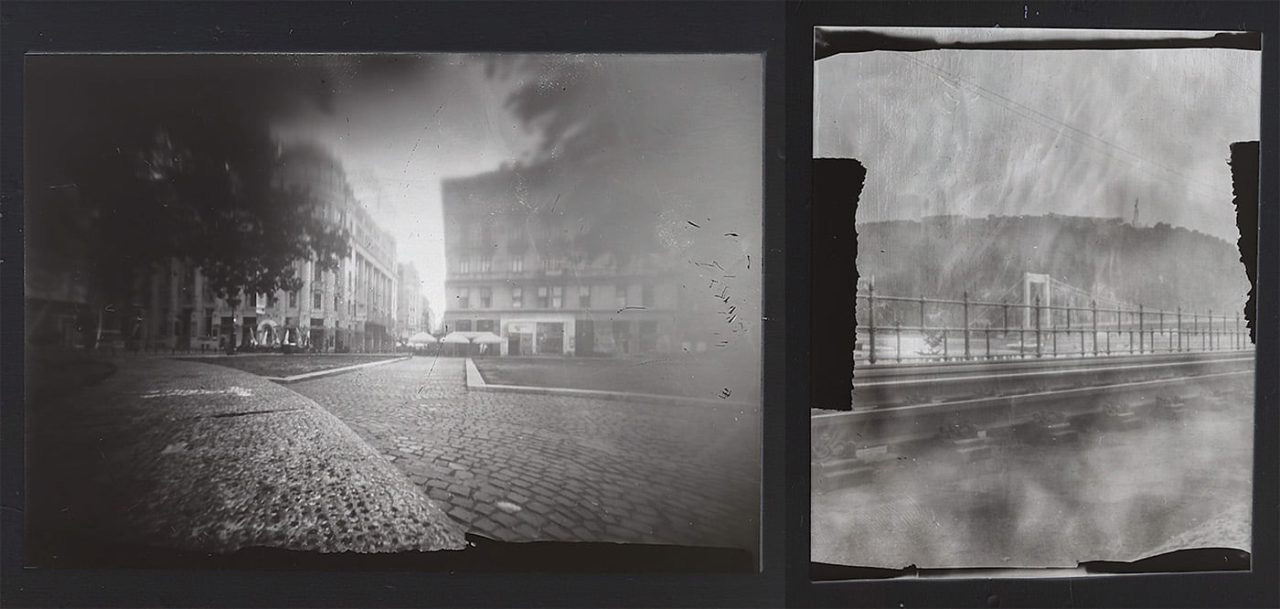
If you want to be a really good photographer and are humble enough, you should also learn about the oldest technique in photography, the Camera Obscura. It consists of just a box, a hole in the box and a light-sensitive material inside the box. While you shouldn’t expect to achieve outstanding photographic results with this technique, it’s a great way to learn the basics of photography. In this video, I show you how I took photos with the camera I built, in case you want to build your own!
What do you need to build a camera?
So if you want to try your hand at taking photos with a pinhole camera and developing images, you’ll need a few simple tools.
To build a camera, you’ll only need a few basic things that every household will have:
- Paper box (say a Whiskys or shoebox)
- Black cardboard or spray paint to make the inside of the box as dark as possible, where the photosensitive material will be placed.
- Double-sided glue
- Scissors or scalpel
- Aluminium foil
- Needle
Get the photo you took!
You can get all the tools you need from our webshop at a reasonable price, from stock.
Let’s get started!
We will designate one side of our chosen box as the optics, and on the other side we will attach our photosensitive material, paper, using a double-sided adhesive. The paper will only be glued in at the very end, and strictly only under a darkroom light. You can do without it if you don’t have a lamp at the moment, but you will need it for the lab.
Cut a small square or hole in the optics with a scalpel or scissors and replace the cut-out area on the inside of the camera with aluminium foil. Then pierce the stretched tinfoil with a sharp needle. The more regular the resulting mini hole, the sharper the image will be. For those looking for a really professional solution, you can use an aluminium plate and a laser. We’ll stick to needles and aluminium foil for now. 🙂
You may also want to make an “optics cap”, which can be a small piece of paper that helps to ensure that light is only exposed to the light-sensitive photo paper at the moment of exposure.
AND DONE!
At least your camera anyway! If you’re going to use it in practice, find a stable position to rest it on. Unfortunately, it’s hard to change the angle of tilt on a table or the floor, but you can find a creative way to do it. It’s not easy to dream up a composition blindly, especially when you don’t really know the angle of view, so you have to rely a bit on your intuition.
The length of exposure will depend on the weather:
- In sunny weather: 1-2 minutes
- In shady weather: 4-5 minutes
- In cloudy weather: 7-8 minutes
It’s important to keep the camera as steady as possible during this time to avoid moving the image.
Recommended products for pre-development
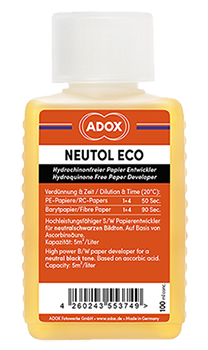
Adox Neutol Eco
Paper Call
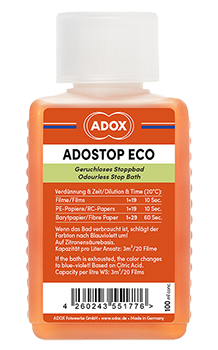
Adox Adostop ECO
Stuffing box
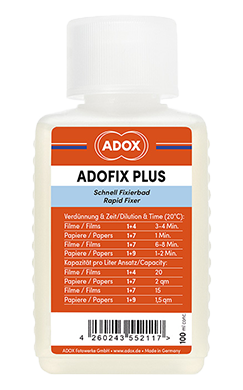
Adofix Plus
Fixing
Basically, it’s that easy to build and photograph with a camera. Once you’ve built your first camera and put it to use, you’ll certainly get a lot of use out of lab work. In the following video, I’ll show you how you’ll be able to develop your images yourself, even in the bathroom.
Lab work requires a lot more than just a few supplies at home. You can even make the dishes and forceps at home with a little suthnituning, but you’ll need the chemicals to make the call. You will also need a darkroom light.
First and foremost, we need to make our small home lab light-tight, so we need to cover glass doors with blankets and use towels to extinguish light spillages under thresholds. But it’s also a good idea to take the picture after sunset.
The caller and the fixer are mixed in the dilution ratio given on the back of the chemical, in our case it was 1:3. So to 1dl of chemical you need to add 3dl of water.
To prepare the stuffing bath:
To 50 ml of 5% vinegar add 250 ml of water.
As shown in the video, with the darkroom lit, we first place our photosensitive photo paper in the caller for about 1 minute, then stop the call using the plug-in shutter. Here, our photo rests for about 30 seconds, then lands in the fixer, where it is fixed for another 2 minutes.
After that, you should wash it in plenty of water, which can take up to 10 minutes, and it’s best to be able to change the water constantly, so a bathroom bath is a good option.
Then dry the picture by clipping it onto a clothes dryer or sticking it to the tiles. There are drying machines for this, but you won’t need one for 1 picture. If after drying, the photo gets puffy, you can press it back into place.
You then need to scan or digitise the finished image in some way. In the absence of a scanner, I took a photo with a DSLR camera. And since your developed image is negative, you have to make it positive in Photoshop, which you can change in a snap with CTRL + I. Or, to reflect it afterwards, because the resulting image is side-shifted.

Tamás Welczenbach
Author of this post
I like shooting on film because it’s slower, it’s tangible and there’s always a little surprise in store – you never know exactly what the end result will be. That uncertainty is exciting for me, and often it’s what brings out the best moments in the images. Film Is Not Dead was created to give others a taste of this world and to help those who are new to film photography find their way. Here you can find tips, tutorials and experiences, but my aim is also to inspire others to experiment and enjoy the process.
I hope that what you have seen and described has inspired you to try the most ancient method of photography. But if you don’t want to go to all the trouble and would prefer a simpler solution, you might want to try converting your existing digital camera into a pinhole camera.
I used to do this by drilling a sensor cap in the middle, then using the previously known tinfoil technique and a tiny hole to form an optic. This can also be a super toy that you don’t even have to develop, because your camera will have the light on it in a flash. And you can see the end result of my lab here: